Battery Name: CR2025
Category: Lithium Manganese Dioxide Button Cell [Portable]
Chemical system: C: Li-MnO2
Model: CR2025
Trade/Brand Name: PAKKO
Rated voltage: 3V
Date of manufacture: See Packing Label
Shelf life: 2 years
Country of origin: China
Manufacturer: Guizhou Pak Ko Energy Technology Co., Ltd.(贵州柏高能源科技有限公司)
Address: A3, No.1 Industrial Park, Xiaoba Town, Jinhaihu New District, Bijie, Guizhou, China
website:www.pakkoenergy.com
Email:marketing@pakkoenergy.com
European Authorized Representative
Representative: MAX Power Products GmbH & Co. KG
Address: Mittlerer Hasenpfad 5 , 60598 Frankfurt am Main , Germany
Contact Person: Markus
Postal Code: 60598
Email: M.Gunkel@mp-products.de
Tel: +49 40 333 12 621
Battery Characteristics Data Sheet
| approximate weight (g) |
capacity (mAh) |
Average duration when used in specific applications |
| 2.47 |
150mAh(Dimensions:20.0 × 2.5 mm) |
750Hrs(Discharge at 15KΩ to E.V.2.0V) |
Hazardous Substances Statement
This product complies with the heavy metal concentration limits set out in Annex I of EU Regulation (EU) 2023/1542:
| Mercury (Hg): |
0.0005% by weight |
| Cadmium (Cd): |
0.002% by weight (portable batteries only) |
| Lead (Pb): |
0.01% by weight (portable batteries only; zinc-air button cells exempt until 18 August 2028) |
This product complies with the applicable restrictions of REACH Regulation (EC) 1907/2006, Annex XVII
This product complies with the EU POPs Regulation (EU) 2019/1021.
⚠️ Warning
Since the battery is not rechargeable, if you try to charge it, it may cause electrolyte leakage or damage to the device.
When the battery is installed, its ”and’-‘polarity must be correct, otherwise the battery may be charged or over-discharged.
Do not short-circuit, heat, throw into fire or disassemble the battery.
Forced discharge is prohibited, which will cause excessive internal gas generation, which may cause swelling, leakage and explosion.
Old and new batteries should not be mixed; when replacing batteries, it is recommended to replace all batteries of the same brand and model at the same time.
Depleted batteries should be removed from the battery compartment to prevent over-discharge, which can cause leakage and equipment damage.
Direct welding is prohibited, which will damage the battery.
Please keep the battery out of the reach of children to prevent swallowing it by mistake; if an accident occurs, please seek medical attention immediately.
Do not disassemble or deform the battery.
Do not store or carry the battery with metal objects (such as keys, coins) to avoid short circuits.
Do not immerse the battery in water or high humidity.
Do not attempt to modify or solder the battery directly.
If the battery leaks, avoid contact with skin and eyes. In case of contact, rinse immediately with plenty of water and seek medical attention.
📛Attention
If the battery leaks and the material comes into contact with the eye, rinse immediately with running water for at least 15 minutes and consult an ophthalmologist immediately.
If the battery emits odor, heat, discoloration, deformation or any abnormal phenomenon during use/storage, please remove the battery from the device immediately and dispose of it properly.
Do not mix batteries of different types, brands or capacities.
Avoid exposing the battery to extreme heat (e. g. direct sunlight, near a radiator).
Available extinguishing agents
CO2 , Dry chemical, Foam extinguisher
Information on Prevention and Management of Waste Batteries for Primary Batteries
In accordance with the requirements of the EU Battery Directive and the Waste Framework Directive, for primary (non‑rechargeable) batteries supplied within the territory of an EU Member State, producers or their authorised producer responsibility organisations shall make the following information available to end‑users and distributors:
(a) Role of end‑users in waste prevention
Follow the device manufacturer’s instructions for correct battery insertion and usage. Avoid storing or using batteries in extreme temperatures or high humidity. Remove batteries from devices that will not be used for an extended period to prevent leakage or unnecessary discharge. Primary batteries are not rechargeable; do not attempt to recharge them, as this may cause leakage or rupture. When the battery is depleted, encourage users to bring it to designated collection points to enable potential material recovery or recycling.
(b) Role of end‑users in separate collection (Article 64)
End‑users are obliged to separate spent batteries from other household waste. Do not discard batteries in unsorted municipal waste or litter them. Separate collection facilitates proper treatment and resource recovery (e.g., zinc, manganese, steel, lithium), aligning with EU environmental objectives.
(c) Separate collection, take‑back and collection points, preparation for reuse, repurposing and treatment
Spent batteries can be returned via: collection bins at retail points; municipal recycling centres; designated battery collection points. Collected batteries will undergo sorting, pre‑treatment (including neutralisation of electrolyte), and material recycling. Reuse or repurposing is generally not applicable for primary batteries, but material recovery is maximised.
(d) Safety instructions to handle waste batteries
Avoid storing waste batteries together with metal objects to prevent short‑circuiting. If a battery shows signs of leakage (e.g., white or crystalline residue), deformation, or overheating, handle it with protective gloves and store it separately in a plastic bag. Never dispose of batteries in fire, as this may cause explosion or release of hazardous fumes. Keep batteries out of reach of children. If swallowed, seek medical attention immediately.
(e) Meaning of labels and symbols (Article 13)
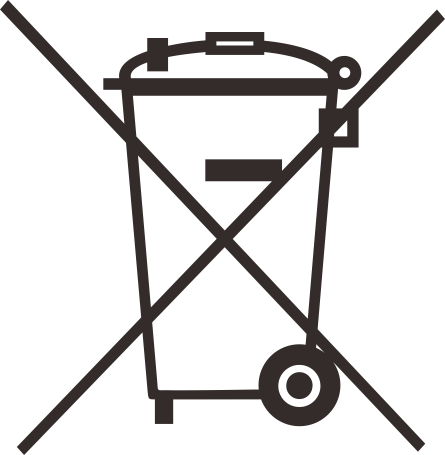
 Crossed-out wheeled bin symbol: Indicates that the battery should not be disposed of with unsorted household waste; it must be separately collected.
 CE marking: Indicates that the battery (or the device it is intended for) complies with applicable EU health, safety, and environmental protection requirements.
 Keep out of reach of children symbol: A warning to prevent ingestion or mishandling, especially for small children.
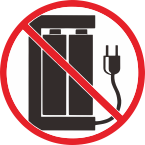
 Do not recharge symbol: This battery is non-rechargeable; attempting to recharge may cause leakage or explosion.
(f) Impact of substances on environment and human health
Primary batteries contain various materials (zinc, manganese, lithium, etc.). If improperly discarded (e.g., landfilled or incinerated), the electrolyte can leak and cause soil and water contamination; heavy metals may accumulate in the environment. Swallowing a battery can cause injury; batteries should be kept away from children. Inappropriate disposal increases environmental burdens, wastes recoverable materials, and may lead to fires or injuries during waste handling. Leaking batteries can cause chemical burns; always handle with care.
This information is provided to support end‑users in responsible battery use and disposal, in line with EU waste legislation.
Conformity with legislation
The above information is in conformity with the following legislations: REGULATION (EU) 2023/1542 OF THE EUROPEAN PARLIAMENT AND OF THE COUNCIL of 12 July 2023 on the harmonisation of the laws of the Member States relating to sustainability, safety, labeling/information of Batteries — battery was assessed and found to be in conformity with the enforceable requirements of Articles 6, 13 of the Regulation.
Supplier responsibility note: We understand that the OEM of the device which contains the battery, or battery supplied by the OEM as a replacement part in the European Economic Area (EEA), has the responsibility of preparing the DOC & TDC. As a battery supplier stipulated in Article 39, we will provide the information included in this document as backup to our customers who are manufacturers.
Disclaimer: The information provided above is supplied by Newleader based on current product characteristics and EU regulatory requirements. This information is subject to change in response to amendments of legal requirements or changes in product characteristics. Newleader reserves the right to modify the content at any time without prior notice.